

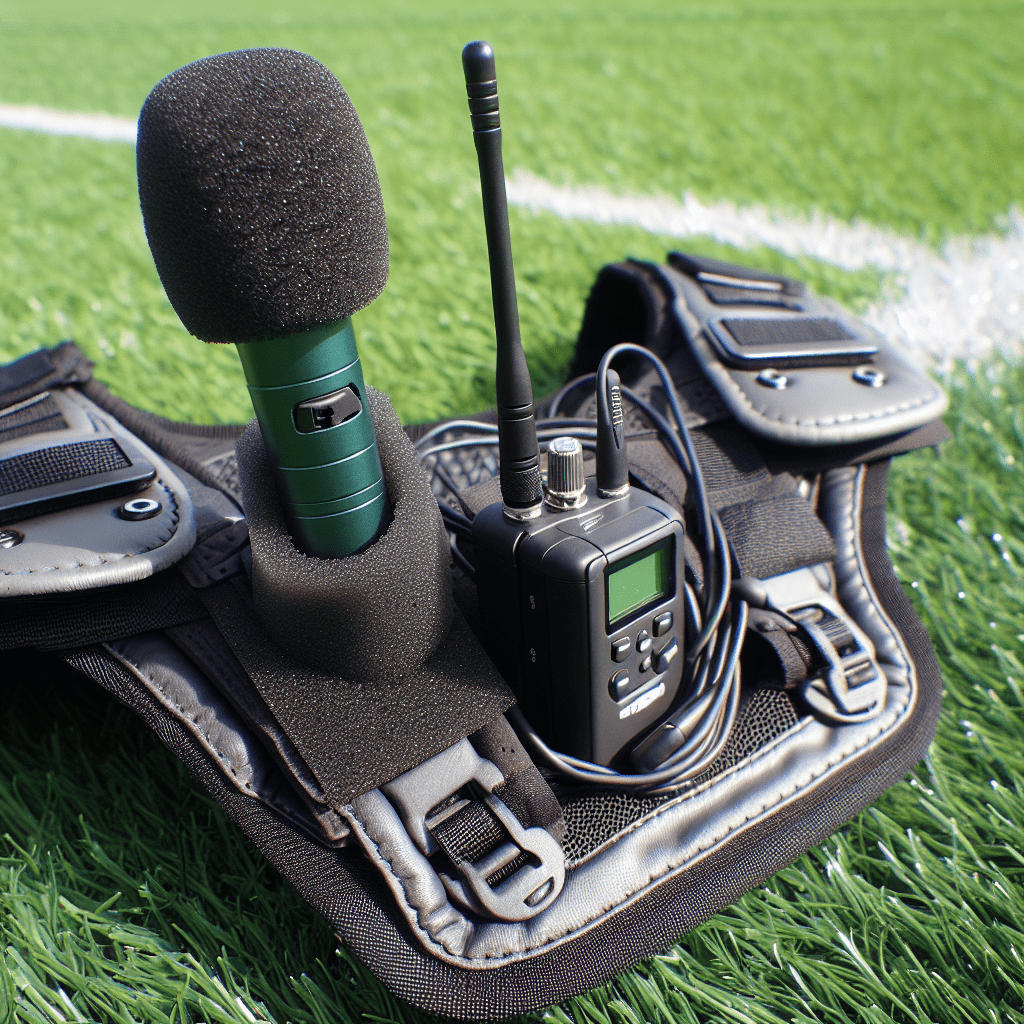
Player Mic’d Up: What On-Field Audio Reveals About Flag Football’s Intensity
Mic Placement Strategies
Body-worn lavaliers vs. helmet mics: Lavs clipped to the neckline or helmet straps provide close, clear pickup of verbal calls and grunts. Neckline placement yields natural tone but risks rustle from jerseys; mounting on shoulder pads hardwired to a back-mounted pack minimizes costume noise.
Harness positioning: A low-profile harness between the shoulder blades keeps the transmitter out of a player’s range of motion. For pass rushers or agile receivers, a hip-mounted belt pack with a short cable can reduce cable tug and impact interference.
Protection and concealment: Use foam windscreens and moisture-resistant covers to guard capsules from sweat, grass stains, and impacts. Strategically color-match covers or use skin-tone packs for minimal visual distraction on camera.
Potential Audio Moments
Quarterback cadence and audibles: Isolating pre-snap signals gives viewers a window into play adjustments, offering a coach’s-eye vantage.
Huddle chatter: Capturing quick exchanges, pep-talk momentum, or even miscommunication adds a layer of authenticity to the broadcast narrative.
Sideline celebrations and trash talk: From a game-winning dive to playful banter, up-close audio evokes real emotion—and sometimes controversy.
Referee calls and whistle clicks: While camera audio often treats these as ambient, dedicated mics can make crisp game-management cues part of the storyline.
Grass impacts: The thud of cleats, the rustle of turf sliding—these subtle foley-style effects, when mixed, heighten the physicality of play.
Wireless RF Challenges on Grass
Variable ground conductivity: Lush grass, damp soil, even metal stakes can alter RF propagation. Conduct frequency scans pre-game to identify clean channels and watch for shifting noise floors during wet conditions.
Multipath and shadowing: Players, coaches, and even stadium structures create RF “shadows” that cause signal dropouts. Employ diversity receivers with dual antennas to maximize reception.
Antenna placement: Elevate receive antennas on tall stands or mounts at the field edge, angling them toward player zones. When possible, deploy remote antennas near sideline helmets for shorter transmission distances.
Power settings and battery management: Running transmitters at maximum legal power ensures robustness but shortens battery life. Balance output against expected signal challenges, and cycle fresh lithium packs during halftime.
Mixing and Monitoring Workflow
Multitrack capture: Record athlete channels on discrete tracks for post-game highlight packages or documentary segments. This lets you isolate soundbites, adjust EQ, or vary levels without affecting the live mix.
Real-time mixing: A dedicated “mic truck” engineer can blend athlete feeds with crowd and commentator mics, ducking levels during critical plays and automating transitions for smooth listener experiences.
Noise-reduction tools: On-board filters or inline de-click processors help tame grass rustle, belt-pack handling noise, or gear squeaks. Light gating preserves spontaneous calls without buzzing background hiss.
Storytelling Impact and Audience Immersion
Athlete mics bridge the divide between field action and fan perception. Hearing a receiver’s instant self-critique or a coach’s urgent sideline instructions brings audiences inside the tactical chess match. These candid snippets fuel highlight reels, social-media soundbites, and in-depth analyses, building deeper emotional connections. Even radio listeners benefit: the visceral snap of a flag pull or the excited shouts in the red zone fosters an immersive soundstage that standard ambient mics can’t replicate alone.
From a production standpoint, on-field audio elevates broadcast value. Packages featuring mic’d-up players have become marquee content, driving higher viewer retention and sponsor interest. For live events and post-game storytelling alike, these raw, unfiltered moments deliver authenticity and amplify the sport’s human element.
Tips for Best Results
Pre-game walk-throughs: Test every channel during warm-ups, checking for costume rustle or obstruction points.
Channel coordination: Use separate frequency banks for each team’s players and officials to prevent crosstalk or intermodulation.
Audio cue sheets: Flag down specific players during key drives, making sure producers can anticipate mics to bring up in the live mix.
Post-game review: Tag standout audio clips in real time to streamline highlight assembly.
By investing in robust RF planning, strategic mic placement, and dynamic mixing workflows, audio teams can harness on-field athlete microphones to create a richer, more engaging flag football experience. The resulting soundscape not only informs and excites but also tells the story of grit, strategy, and raw emotion that defines the sport.
⚡ Weekly FlagSnaps you may have missed
Veterans’ League showdown reignites classic rivalries with jaw-dropping last-second flags
👉 Read Full Article
Rookie QB drills down on release speed & accuracy in our exclusive practice session breakdown
👉 Read Full Article
Top five defensive formations of the season dissected by veteran coordinators
👉 Read Full Article
Women’s flag football rising stars shatter attendance records at national invitational
👉 Read Full Article
How technology is transforming injury prevention in turf and grass environments
👉 Read Full Article
Under-the-radar rec league that produced this year’s breakout playmakers
👉 Read Full Article
End-zone celebrations: Creative choreographies capturing the culture behind the flags
👉 Read Full Article
Midseason rule tweaks: What you need to know about the updated pass interference guidelines
👉 Read Full Article
From couch to field: Training regimens fueling record-breaking verticals in flag football
👉 Read Full Article
Audio fails & recoveries: Live-sound horror stories from flag football broadcasts—and how engineers saved the day
👉 Read Full Article
